

Vesztergombi Pince
Vesztergombi Bikaver 2021
Vesztergombi Bikaver 2021
Couldn't load pickup availability
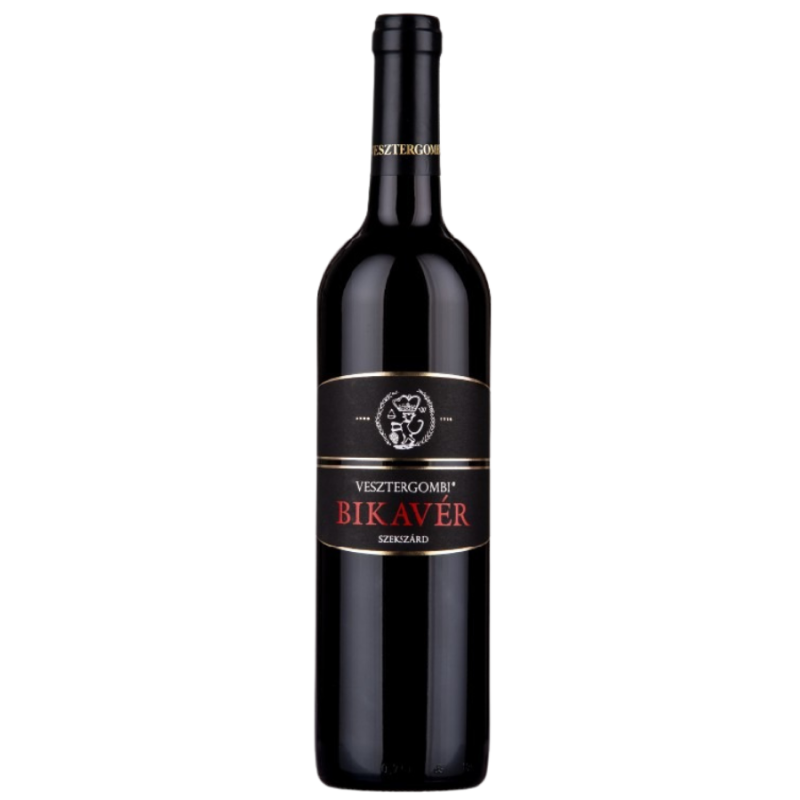
Vesztergombi Bikavér 2021
If we pay attention to Bikavér, it tells us about past centuries, traditions, the work done in the vineyards, and perhaps a little about the Szekszárd region.
Grape Varietals & Region: A five-way Szekszárd blend of Cabernet Sauvignon, Cabernet Franc, Syrah, Kékfrankos and Kadarka — Kadarka being the grape that, by law and by tradition, actually makes a Bikavér a Bikavér, even in small proportion. Grown across Vesztergombi's replanted vineyards on Szekszárd's deep loess hillsides, where windblown, lime-rich silt drains fast and holds heat, and a long, hot growing season with a reliable Indian summer tail lets even late-ripening reds like Cabernet get properly ripe this far north.
Taste Profile: Dark plum and sloe up front, with dried fruit, tobacco and a savoury edge of clove and coffee bean underneath. The palate is full and creamy rather than austere — ripe fruit wrapped in sweet spice, cardamom and cocoa — running into a warming, medium-length finish. Good with something rich and gamey, or just cured meats and a hard cheese.
Winemaking Process: The blend ages 24 months across 300-litre and 500-litre Hungarian oak barrels — big enough to let the wine keep its own voice rather than getting swallowed by new wood — then another six months settling in bottle before release. Dry, conventionally made, no shortcuts: just patient oak ageing to let five different grapes actually integrate.
Winemaker: The Vesztergombi family's Szekszárd winemaking history goes back to the 1700s — the coat of arms still on their labels is that old, and a family ancestor, György Vesztergombi, once held the title of the town's first vineyard judge. That continuity was broken hard by post-war collectivisation, and it took until privatisation in 1991 for Ferenc Vesztergombi to reclaim 10 hectares and a cellar on Kadarka Street and found the modern winery — earning Hungary's Winemaker of the Year title just two years later. Today his son Csaba, who trained in viticulture and worked a harvest season in Australia, runs the day-to-day alongside his parents across 27 hectares and six vineyards, most replanted at far higher density than the old collective-farm plantings ever managed.